Understanding Your Financial Reports: What Every Owner Should Know
Financial Reporting
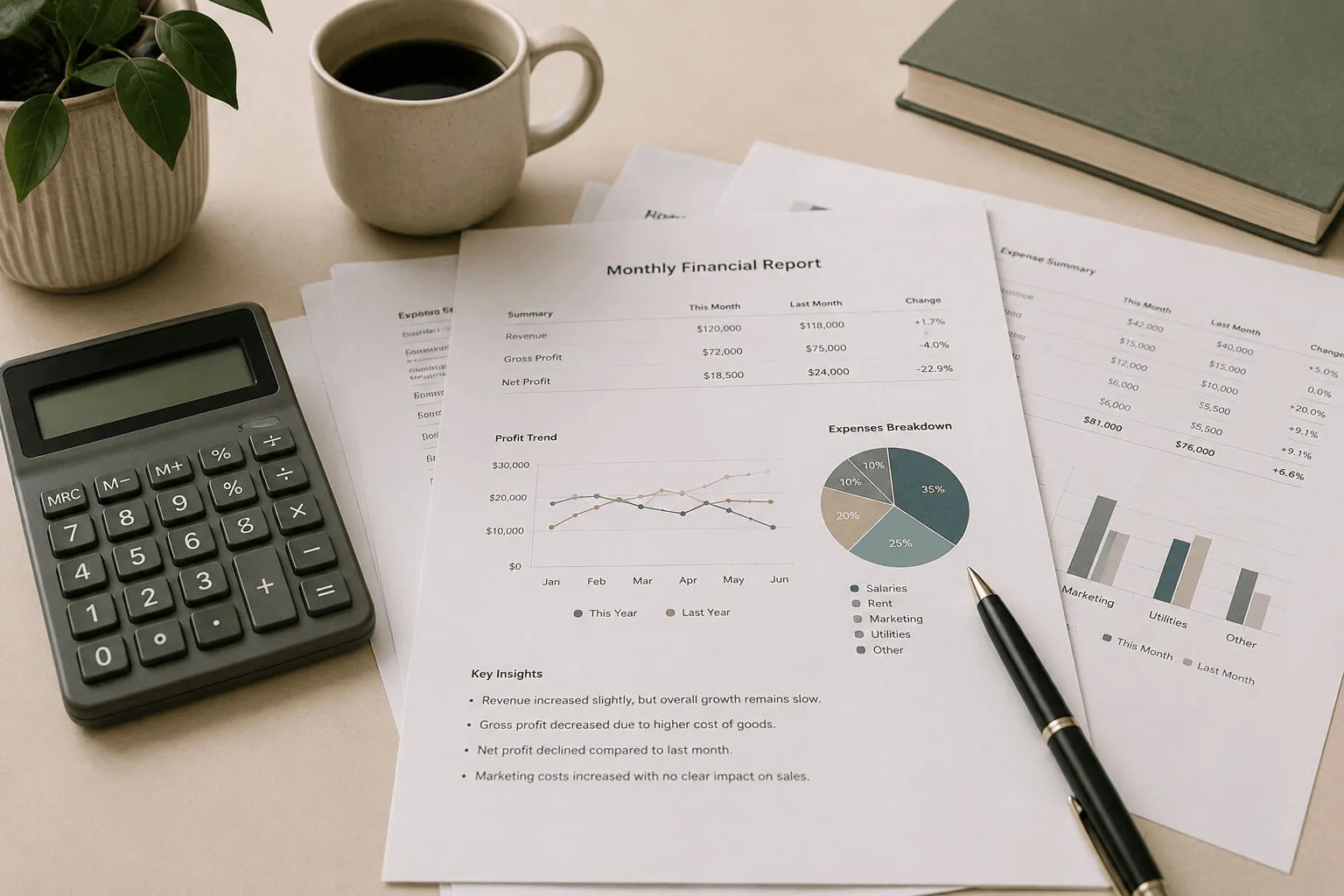
Financial reports are among the most valuable tools available to a business owner, yet they're often the least understood. Many people receive monthly reports, glance at a few numbers, and file them away without using the information to guide decisions.
The purpose of financial reporting isn't simply to satisfy accounting requirements—it's to provide a clear picture of your business's financial health. When you understand what your reports are telling you, you can identify opportunities, recognize potential risks, and make decisions with greater confidence.
Learning to read your financial statements doesn't require an accounting background. It simply requires understanding what each report measures and how the information connects to your day-to-day operations.
The Three Financial Reports Every Owner Should Know
Most businesses rely on three core financial reports:
Income Statement (Profit and Loss Statement)
This report shows how much revenue your business earned during a specific period, along with the expenses required to generate that revenue. The result is your net profit or loss.
The income statement helps answer questions such as:
Is the business becoming more profitable?
Are expenses increasing faster than revenue?
Which months or seasons perform best?
Understanding these trends makes it easier to evaluate business performance over time.
Balance Sheet
The balance sheet provides a snapshot of your business at a specific point in time. It summarizes what the business owns (assets), what it owes (liabilities), and the owner's equity.
Rather than measuring performance, the balance sheet shows overall financial stability and helps you understand whether your business has the resources to support future growth.
Cash Flow Statement
Profit doesn't always equal available cash. A cash flow statement tracks the movement of money into and out of the business, helping you understand whether there is sufficient cash to meet everyday obligations.
Strong cash flow management allows businesses to pay suppliers, invest in growth, and prepare for unexpected expenses without unnecessary financial pressure.
The Numbers That Deserve Your Attention
While every business has unique financial goals, several key indicators are worth reviewing on a regular basis.
Consider monitoring:
Revenue growth over time
Gross and net profit margins
Operating expenses
Cash flow trends
Outstanding accounts receivable
Available cash reserves
Reviewing these metrics monthly provides a clearer understanding of financial performance and makes it easier to identify changes before they become significant problems.
Looking for Trends Instead of Individual Numbers
One month's results rarely tell the whole story. Financial reports become far more valuable when viewed over time.
For example, a slight increase in expenses may not seem concerning until you realize the trend has continued for six consecutive months. Similarly, improving revenue may appear positive until you compare it against declining profit margins.
Looking for patterns rather than isolated figures helps business owners understand the direction of the business, not just its current position.
Questions Every Business Owner Should Ask
Each time you review your financial reports, it's helpful to ask a few practical questions:
What changed compared to last month?
Why did those changes occur?
Are profits improving or declining?
Is cash flow supporting future business needs?
Which expenses deserve closer attention?
What actions should be taken before the next reporting period?
These questions turn financial reporting into an active planning process instead of a passive review of historical information.
Turning Reports Into Better Decisions
Financial reports are far more than accounting documents—they're decision-making tools. When they're accurate, organized, and easy to understand, they provide the insight needed to manage growth, improve profitability, and respond confidently to changing business conditions.
The goal isn't to memorize accounting terminology or become a financial expert. It's to develop enough understanding to recognize what your business is doing well, identify areas that need attention, and make informed decisions based on reliable information.
When you begin using your financial reports as strategic resources rather than administrative paperwork, they become one of the most valuable assets your business has.
Insights and Resources
Practical insights to help you better understand and manage your business finances.